










 Florida Animals
 Florida Key Deer
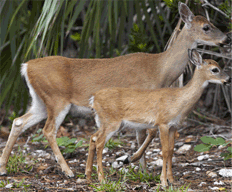 The
Florida key deer is a very small animal;
these animals were usually found in the
Florida key areas, but now their population
has reduced and they are found only in the
lower Florida key areas. The islands of
Big Pine, Cudjoe, West Summerland, Big Torch,
Howe, Little Pine, Little Torch, Middle
Torch, No Name, and Sugarloaf are the areas
in which the Florida key deer resides permanently.
The
Florida key deer is a very small animal;
these animals were usually found in the
Florida key areas, but now their population
has reduced and they are found only in the
lower Florida key areas. The islands of
Big Pine, Cudjoe, West Summerland, Big Torch,
Howe, Little Pine, Little Torch, Middle
Torch, No Name, and Sugarloaf are the areas
in which the Florida key deer resides permanently.
The key deer is identified with its smaller size; this animal appears small than its close associates the white tailed deer. The adult male key deer is called as the buck, the weight of this animal ranges up to 25 to 34 kg, and the adult female deer is called as the doe and the weight of this animal ranges up to 20 to 29 kg. The adult male grows thirty inches tall while the female grows up to 36 inches, the height is measured up to their shoulder level.
This animal comes in a reddish brown color, and sometimes even grey brown animals can be seen. The antlers grow only for the males, these antlers are shed during the months between February and March, and they are regrown during the month of June.
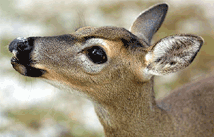
These animals consume a lot of plants, they feed on 150 different kinds of plants, but they largely feed on red mangroves, white mangroves and black mangroves, and thatch palm berries. They thrive well only if they can consume fresh drinking water, and they can tolerate only mildly brackish water.
The Florida key deer breeds during all seasons, but then it is pronounced only during the months of September and October. They exhibit a very low rate of reproduction. The average rate of reproduction is 1.08 fawns per year. The male key deer lives up to 8 years, while the females have a longer life, they live for around 17 years.
These animals belong to the extinction community and in 1939 itself key deer hunting was banned by the government, but then continued poaching and lack of habitat space lead to the near extinction of the key deer family in the 1950’s. Soon a lot of animal refuge centers were opened and these animals were saved. Now they belong to the endangered species list.
Nowadays these animals are protected considerably, but then they are experiencing around thirty to forty kills for a year, this is due to road accidents, attack of dogs and so on.